
The “Great Lakes as a Classroom” Workshop
In June, the Lake Superior Reserve was the host of a brand new workshop for educators called “Great Lakes as a Classroom”. With funding from the National Oceanic and Atmospheric Administration’s program “Planet Stewards”, educators from three National Estuarine Research Reserves (Lake Superior, Old Woman Creek in Ohio, and Green Bay in Wisconsin) gathered 21 teachers from across the Great Lakes region to learn more about how they could incorporate place-based environmental education into their classrooms and education settings. The Friends of the Lake Superior Reserve provided logistical and financial support for this workshop as well.
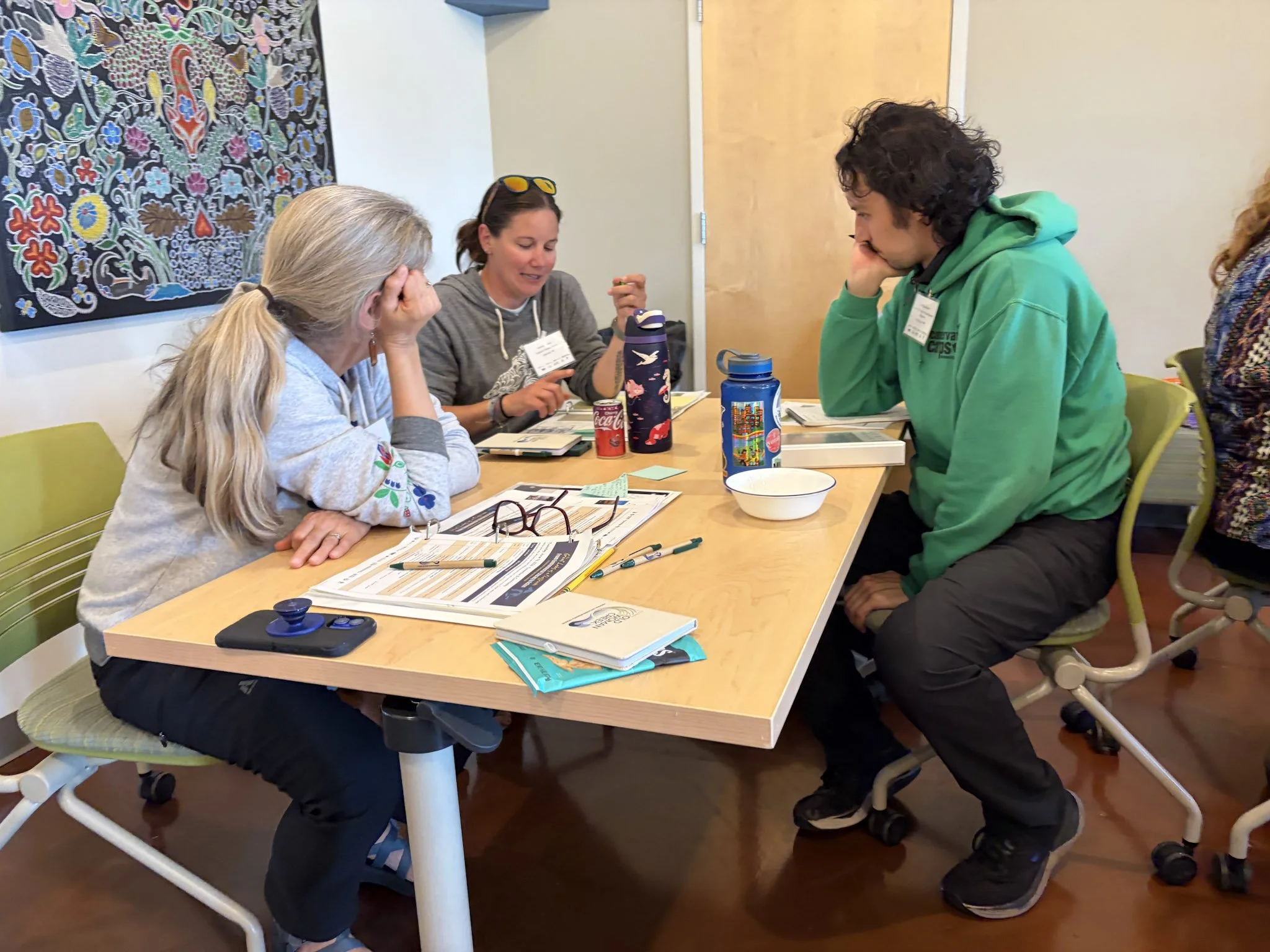
photo: Educators at the GLaaC workshop work on a lesson example. (credit: Ryan Feldbrugge)
The workshop was an immersive three days of both indoor and outdoor experiences. On day one, participants were introduced to each other by creating their own piece of artwork that reflected their professional and personal experiences. Each section was combined to create an estuary art piece, reflecting the meeting and mixing of ideas, experiences, and personalities. Participants learned about the St. Louis River Estuary and estuary ecosystems that they were familiar with. They were introduced to the Great Lakes, Treaty Rights in the region, and some lessons they could take away back to their classrooms. Following the training on day one, attendees could gather for dinner at Wisconsin Point for dinner and to socialize.
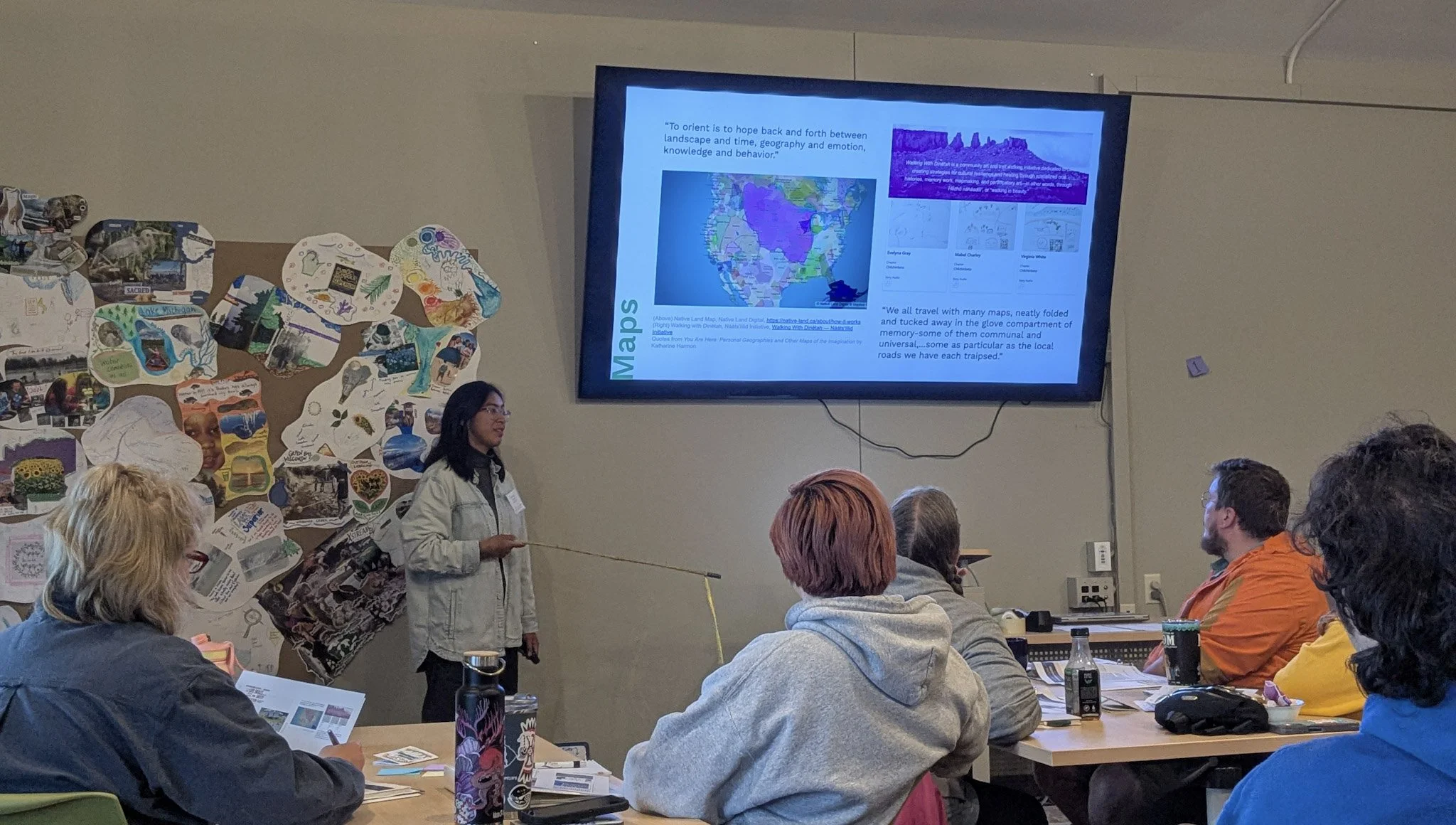
photo: Steph Garcia gives a presentation on the concept of “place-making.” (credit: Ryan Feldbrugge)
Day two brought more learning for teachers as workshop hosts provided more lessons and presentations on map characteristics and perspectives, place-making through environmental design, professional development and funding opportunities for teachers, a lesson on relationships with plants, and a resource fair to gather more tools and information to incorporate into classrooms. The day concluded with a trip to the Great Lakes Aquarium.
The final day of the workshop gave participants the opportunity to get outside and into the estuary, including canoeing in Pokegama Bay to learn more about the Reserve’s water quality monitoring program and stewardship on Wisconsin Point to learn about cultural fire and pulling non-local plant species like Spotted Knapweed (Centaurea stoebe) and Yellow Tansy (Chrysanthemum vulgare).
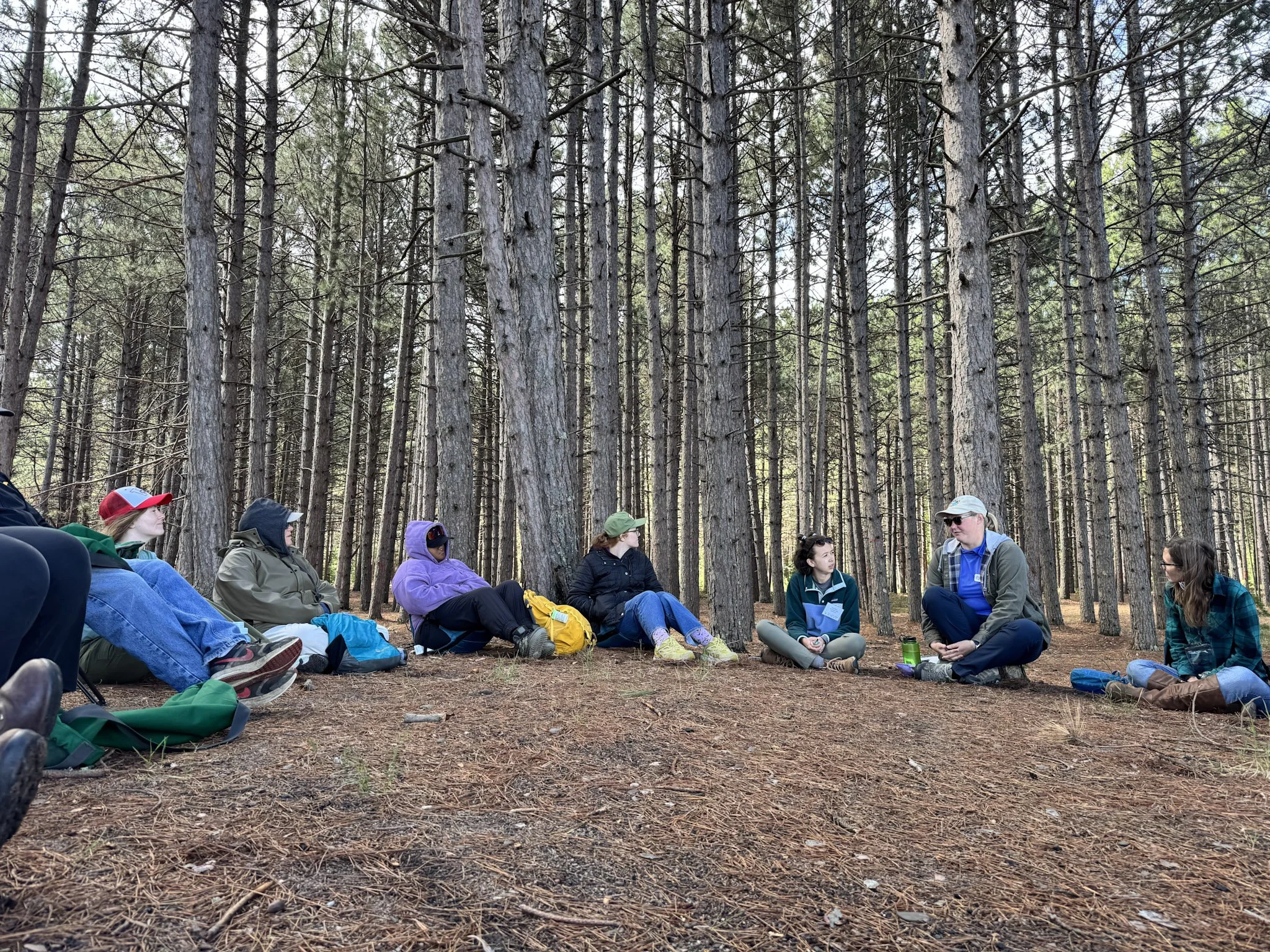
photo: Educators gather at Wisconsin Point to discuss cultural fire. (credit: Luciana Ranelli)
Not only was this an opportunity for teachers to come together, for many in a new place, but also for the Great Lakes National Estuarine Research Reserves to collaborate in a new way. Only two reserves (soon to be three with the designation of the Green Bay Reserve) are on the Great Lakes coastline and freshwater estuaries. With funding from Planet Stewards, this was a brand new opportunity for both participants and hosts.
Article by Callie Grones
Cover photo: Great Lakes as a Classroom workshop attendees and hosts (credit: Luciana Ranelli)