
What’s New at the Reserve? Winter 2026
Reawakening Ishkode (Fire) at Wisconsin Point
Since the last edition of What’s New at the Reserve, there have been sparks of change at Wisconsin Point. On a bright and sunny November 5, a group from the Superior Fire Department, Fond du Lac Band of Lake Superior Chippewa wildland fire program, Lake Superior National Estuarine Research Reserve, The Nature Conservancy, Red Cliff Band of Lake Superior Chippewa, and UW-Platteville gathered together to light the first cultural prescribed fire on Wisconsin Point in 159 years.
In contrast with the intense wildfires we see more frequently in the face of climate change, intentional and low-intensity fires are not only beneficial, but necessary for many habitats. This includes the red pine forests of the Great Lakes, which evolved alongside Indigenous stewardship and caretaking and shaped the forests we see today. Without fire, red pine seedlings are unable to germinate, and these forests as we know them will eventually die. Vern Northrup, Elder of the Fond du Lac Band of Lake Superior Ojibwe and retired Wildland Fire Operations specialist with the Bureau of Indian Affairs, has been dreaming about fire on both Wisconsin and Minnesota Points for many years.
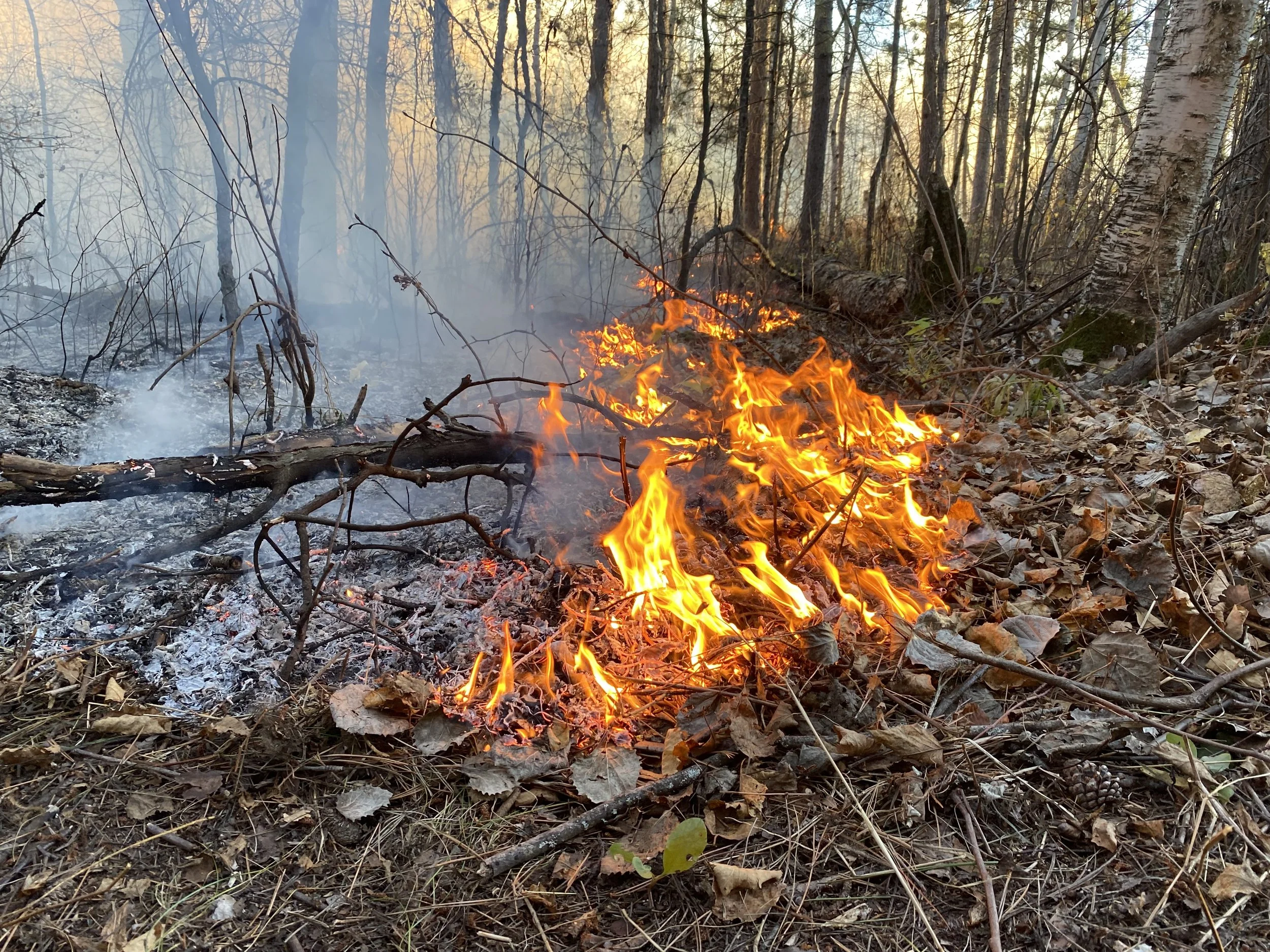
Ishkode (fire) slowly moving through the understory of the pine forest on Wisconsin Point. (credit: Callie Grones)
“The Anishinaabe used fire to manage their environments since the Anishinaabe first came to this world. The spirit of fire is the oldest spirit on the Earth,” said Northrup at the Lake Superior Reserve’s River Talk event in February 2025 during the planning process for the project. Fire is an integral part of caretaking for Ojibwe people and many other Indigenous peoples across the continent for thousands of years. When Ojibwe people occupied Wisconsin Point, they used fire for many reasons, including to promote the growth of blueberries and using the resin from the red pine to seal birch bark canoes. When Ojibwe people were forced from Wisconsin Point, the fires ceased and the forest has been in decline. With the reintroduction of fire to Wisconsin Point, the land can begin its recovery and both land and people can heal.
A small, 22 acre section of the old growth red pine forest on Wisconsin Point was chosen as the first site for fire. This section required minimal clearing of understory brush and shows evidence of periodic, intentional fires through scars on the trees. Many trees also have cultural modifications, like cuts in the bark where pine resin was collected for canoe making. On the day of the fire, crews gathered together at 11:00 am for a ceremony and briefing, then began lighting the fire at noon. The test fire was lit by Vern and Mayor Jim Paine of the City of Superior, and the crew took over to light the rest of the site. The white smoke was visible in both Wisconsin and Minnesota, which dispersed as planned over Lake Superior. Crews moved fire strategically through the site, and the burn was complete after several hours as the sun began to set. During the fire, the City of Superior also held a press conference at the Bunge Dock to address community questions and allow them to see the fire from a safe distance across Allouez Bay.
More cultural prescribed fires are being planned for the rest of Wisconsin Point, including near Lot #5 in the pine plantation. This section requires more extensive preparation, as the pine plantation has never been thinned. Currently the trees are packed closely together, preventing sunlight from hitting the ground and hindering tree growth. Additionally, this has created an understory of minimal plant life. Visitors may see some tree thinning and clearing in the next year, which is meant to prepare the site for fire and mimic a natural and healthy red pine forest.
Concurrently, planning for reintroduction of fire to Minnesota Point is underway across the bay by a team from the Fond du Lac Band of Lake Superior Chippewa, City of Duluth, Minnesota Point 50, Dovetail Partners, and Good Sky Guidance. The first prescribed fire there is planned for a section of the old growth pine forest beyond the airport in the Minnesota State Natural Area. Both teams in Wisconsin and Minnesota are committed to safety, ecological health, and a culturally informed restoration practice and act of reciprocity that has existed for thousands of years.
To learn more about Ishkode at Wisconsin Point, visit superiorwi.gov/ishkode.
Return of the River Talks
The River Talks are a staple of Lake Superior Reserve community programming. As winter sets in along the shores of Lake Superior, community members can stay inside at the Lake Superior Estuarium while still learning about the beauty of the St. Louis River estuary. The River Talks take place on the second Wednesday of the month at 6:00 pm from December to April (excluding March due to the St. Louis River Summit). Each talk covers a significant place or effort in the estuary and invites a diverse group of speakers to share their knowledge.
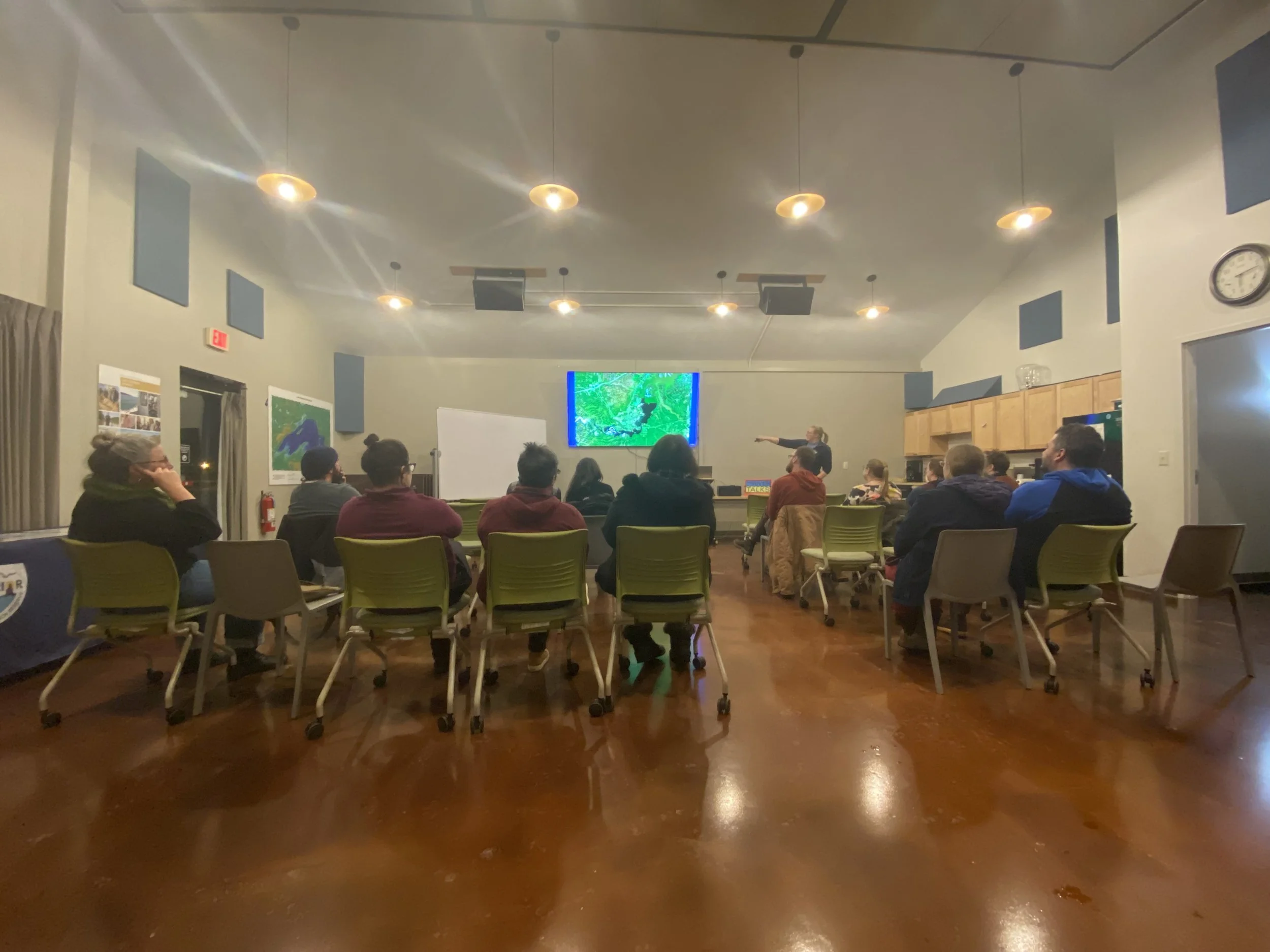
Kirsten Rhude presents a River Talk about forest restoration on some St. Louis River estuary islands. (credit: Callie Grones)
The 2025-2026 series includes several talks from Reserve staff as well as individuals from partner organizations. Kirsten Rhude, the Reserve’s Stewardship Coordinator, kicked off the series with a River Talk called Islands Without Ash. With a multi-year Great Lakes Restoration Initiative grant, the Lake Superior Reserve began restoring black ash forests affected by Emerald Ash Borer (a non-native green beetle that kills ash trees). Many trees on the estuary’s islands are black ash, and with this grant the Reserve worked with Wisconsin Conservation Corps crews to plant over 32,000 seedling trees of various species over three years. This helps restore these islands’ forest ecosystems and reduce soil erosion.
The second River Talk was a panel on manoomin (wild rice) restoration in the St. Louis River estuary, with speakers Matt Steiger from Wisconsin Dept. of Natural Resources, Darren Vogt from 1854 Treaty Authority, Tom Howes from the Fond du Lac Band of Lake Superior Chippewa Resource Management Division, and moderated by Deanna Erickson, Lake Superior Reserve Director. Attendees learned about the ecological and cultural significance of manoomin and how efforts to restore it have brought back rice beds to places where the plants once lay dormant or void.
The third River Talk was all about plants, specifically the plant guide Ganawenindiwag: Working with plant relatives to heal and protect Gitchigami shorelines. Speakers included Karina Heim, Lake Superior Reserve’s Coastal Training Program Coordinator, and Rob Croll from the Great Lakes Indian Fish and Wildlife Commission (GLIFWC). Attendees learned about how the plant guide was created and how plant relatives help us navigate changing conditions along shorelines and in our communities. To access Ganawenindiwag online, you can visit GLIFWC’s website linked here.
The final River Talk, “Why is the water green?”, will take place on Wednesday, April 8 at 6 pm in the Lake Superior Estuarium Confluence Room. Speakers include Hannah Nicklay, interim Research Coordinator, and Addi Knoll, Monitoring Technician at the Lake Superior Reserve. Topics included are the importance of water quality monitoring, the emerging threat of harmful algae blooms (HABs), and what the Reserve is doing to address community concerns.
To learn more about events at the Lake Superior Reserve, you can visit their website at lakesuperiornerr.org/events-news/ or on the Reserve’s Facebook page (linked here).
Winter highlights from the Coastal Training Program
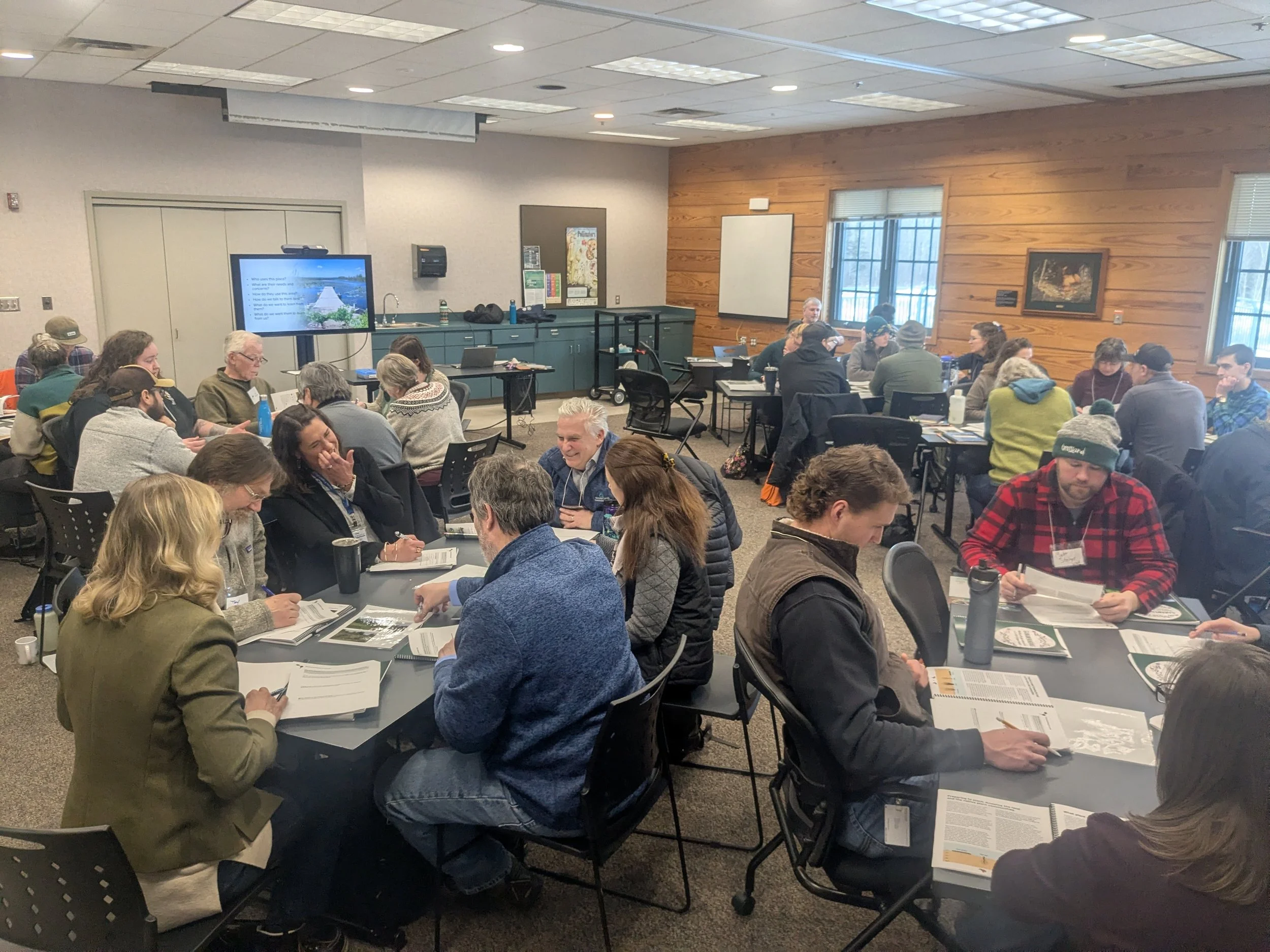
Attendees of the culturally-informed restoration workshop (credit: Karina Heim)
The Lake Superior Reserve’s Coastal Training Program opportunities for professionals and community leaders to gain skills and knowledge that strengthen coastal communities. Among its many roles, the Coastal Training Program plans and hosts workshops to cultivate skills in communication, decision-making, and research-based strategies to respond to changes in the local environment.
Recently, the Coastal Training Program helped facilitate three workshops on culturally-informed restoration, plain language communication, and research poster creation and presentation. In late January, the program debuted a workshop for restoration professionals designed to guide culturally-informed restoration in Lake Superior shoreline environments. This workshop builds on the principles presented in Ganawenindiwag, and was designed and cofacilitated by Karina and Rob. The plain language workshop was held in early February and gathered natural resource professionals interested in learning about clear and effective communication in their writing. Taught by individuals from Wisconsin Literacy, the workshop focused on improving word choice, content organization, and formatting to communicate clearly to a general audience.
On Thursday, February 19, representatives from the Lake Superior Reserve and Lake Superior Research Institute hosted a workshop about poster creation and presentation. The workshop was designed for students and natural resource professionals alike to adequately prepare for opportunities to share research, projects, and other information at sharing events like the St. Louis River Summit. Hosts of the poster presentation workshop were advised by the Coastal Training Program through the planning process, and the workshop was held as a precursor to the St. Louis River Summit’s poster session.
“Our workshops don’t just deliver information—they create a space where professionals learn from each other. We listen to the questions local decision‑makers are raising and provide tools that meet those needs. Still, the real magic comes from the peer‑to‑peer exchange happening in the room,” said Karina Heim, the Lake Superior Reserve Coastal Training Program Coordinator.
The Coastal Training Program provides numerous opportunities to our coastal communities. Do you have an idea about how to better prepare your community for impacts of changing environments? The Lake Superior Reserve has opened applications for the Enduring Lake Superior Communities program, which helps local, regional, county, or tribal teams complete a resilience project of their choosing.
Past projects have addressed concerns like flood resilience, infrastructure, preparedness plans, engaging communities, and improving communications. To apply for the Enduring Lake Superior Communities program, visit the Lake Superior Reserve website (link here) and apply by April 10, 2026. If you have any questions about the program, reach out to Karina Heim (karina.heim@wisc.edu), Lake Superior Reserve Coastal Training Program Coordinator.
Article by Callie Grones, edits by Karina Heim and Kirsten Rhude
Cover photo: Ishkode on Wisconsin Point (credit: Callie Grones)